Food Hall Renaissance NYC 2026: Immersive Markets Reshape

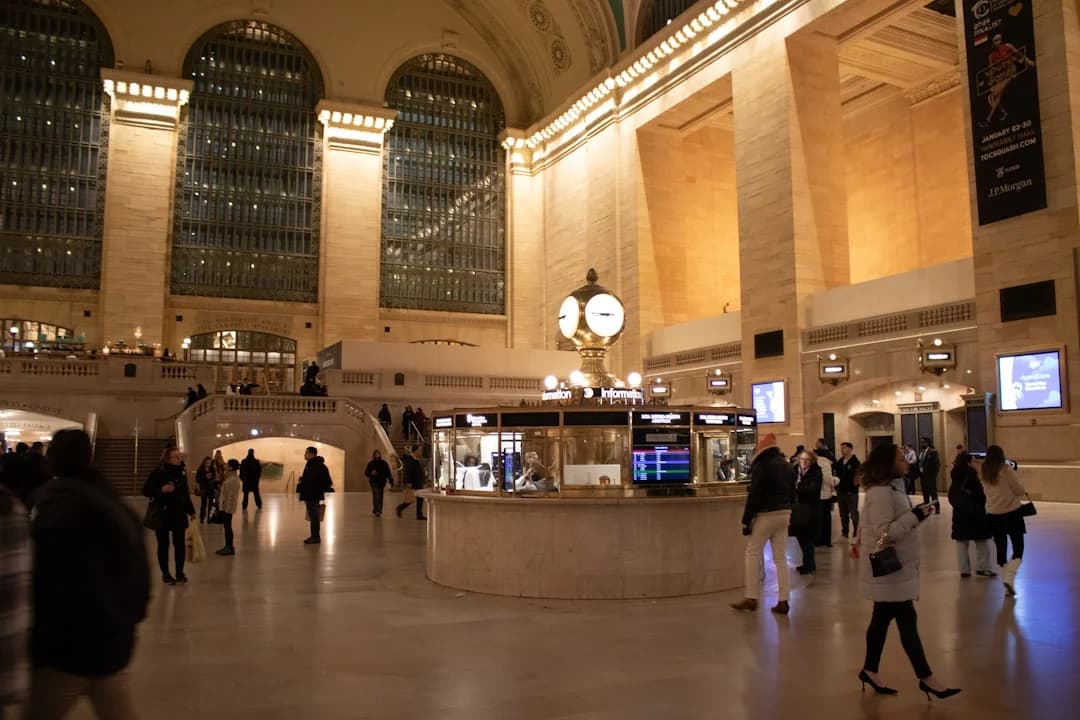
Photo by Zoshua Colah on Unsplash
New York City is deepening its evolution as a global stage for immersive, experience-driven dining, a trend being framed in industry circles as the Food Hall Renaissance NYC 2026. The period is marked by high-profile openings, ambitious redevelopment plans, and a growing emphasis on markets that blend culinary variety with social programming, live performances, and transit-adjacent access. Most notably, Time Out Market New York, Union Square opened to the public on September 26, 2025, bringing a curated lineup of kitchens, bars, and cultural programming to a high-traffic Manhattan node. At the same time, a separate Midtown project—Shaver Hall, a 35,000-square-foot food hall inside the former Lord & Taylor building at 424 Fifth Avenue—entered a definitive construction and leasing phase with a target for early 2026 openings. These developments, along with broader airport and transit-led food hall concepts, underscore a data-driven shift in how New York neighborhoods are developing identity around immersive food experiences. Time Out Market Union Square’s opening, a milestone for the brand in New York, is widely documented as part of the fall 2025 wave of new urban food destinations. (timeout.com) The Lord & Taylor building story, including Shaver Hall’s planned footprint and operator, has been covered across multiple outlets and industry briefs, with early looks indicating a late-2025 launch and firm commitments for early 2026 openings. (6sqft.com)
The scale and speed of these announcements reflect a wider market dynamic: operators are infusing food halls with more than meals, turning them into social and cultural hubs that compete with standalone dining rooms and trend-driven neighborhoods. Analysts point to a growing role for “anchor” food-and-beverage concepts in attracting foot traffic, launching cross-venue events, and extending a location’s cultural reach. The trend aligns with broader retail and urban development outlooks that see food halls as engines of placemaking, capable of driving longer stays, more meaningful neighborhood experiences, and improved transit-grade access. In short, the Food Hall Renaissance NYC 2026 is less a single event than a multi-year continuum of place-making, design innovation, and market strategy. The rise of F&B anchors and the accompanying emphasis on mixed-use experiences is a theme echoed in major retail and urban-futures analyses released in 2025 and 2026. (jll.com)
Section What Happened
Time Out Market New York, Union Square Opens Sept 26, 2025
Time Out Market New York, Union Square opened its doors on September 26, 2025, marking the brand’s second New York flagship and its latest expansion into the city’s food-hall scene. Located on the ground floor of Zero Irving at 124 E. 14th Street, Union Square, this market brings together a curated roster of culinary concepts, drinks, and cultural programming under one roof. The public-facing launch followed a months-long promotional and media cycle, highlighting Time Out Market’s strategy of pairing food with live performances and local storytelling. The market’s early press materials emphasize a multi-kitchen lineup designed to offer a city-wide taste of New York’s diverse dining scene, with a mix of established favorites and emerging operators. The opening was widely covered by Time Out’s own outlets, including a public-facing feature detailing hours, vendor lineups, and the market’s city-reflective approach. (timeout.com)
In its Union Square location, Time Out Market is designed to feel like a civic stage as much as a food hall. Early reporting highlights its 21 distinct kitchens, three bars, and a central performance or stage area intended to host live programming, as well as rooftop views that connect the interior space with the surrounding skyline. The market’s format is positioned to serve as a social and culinary crossroads, mirroring Time Out’s global playbook of urban cultural markets. Market operators and transactional partners have framed the project as a practical way for neighborhoods to anchor community life around food, drink, and art. (timeout.com)
The opening has also connected to broader conversations about how new food halls influence nearby businesses, office corridors, and transit access. By coordinating vendor lineups with neighborhood demographics and tourism flows, Time Out Market Union Square aims to convert passersby into extended-stay visitors, a dynamic that continues to inform the design choices and tenant strategies of newer markets entering the market. Analysts watching the NYC food-hall ecosystem have noted that the Union Square launch represents a meaningful data point in a larger shift toward experience-first dining within dense urban cores. (jll.com)
Shaver Hall Takes Shape in Midtown Inside the Lord & Taylor Building
Shaver Hall, a highly anticipated food hall developed by The Food Hall Co., is taking shape inside the landmark Lord & Taylor Building at 424 Fifth Avenue in Midtown Manhattan. The project, named after former Lord & Taylor president Dorothy Shaver, is slated to open in late 2025 with a broad press push indicating a concrete launch in early 2026. Public documentation and industry coverage since 2024 has framed Shaver Hall as a flagship example of the next phase in New York City’s food-hall expansion—an upscale, highly curated culinary destination embedded within a landmark retail-adjacent address and connected to Amazon’s Hank office campus in the same block. The project’s scope is sizable: approximately 35,000 square feet of curated stalls, a cheese/wine focus, and additional amenities designed to create a social and entertainment-forward consumer experience. (6sqft.com)
A first-look feature published by 6sqft in April 2025 described the plan as an immersive, fashion-forward food hall with 11 distinct concepts, including an omakase-driven kitchen and a dedicated wine-and-cheese bar, plus a performance space and two full-service restaurants. The article emphasized design that honors the building’s history while delivering a contemporary, upscale atmosphere that could redefine Midtown’s food-court typology. Amazon’s involvement—purchasing the building and repurposing it as office space while coordinating with a food-hall operator—adds a structural layer to the project’s rationale: a transit-connected, workplace-adjacent social hub designed to draw both workers and visitors. (6sqft.com)
Additional reporting confirms ongoing progress and a now-firm schedule with a February 2026 opening window for parts of Shaver Hall, while the broader market rollout has continued to attract attention from industry watchers. Eater NY highlighted the late-2025-to-early-2026 timeline, and Seneca Group’s project pages provide detail on the property’s status and the milestone targets, underscoring the project’s role as a major Midtown pivot point for food-led placemaking. The Lord & Taylor building’s reimagining is part of a larger narrative about adaptive reuse of landmark addresses to support modern, mixed-use ecosystems that pair corporate campuses with public-facing experiences. (ny.eater.com)
Broader Context: Transit-Linked and Airport-Adjacent Food Halls
As part of the broader Food Hall Renaissance NYC 2026, developers and operators are increasingly pursuing transit-linked and airport-adjacent formats. In addition to urban centers like Union Square, major transportation corridors and airports are becoming strategic hubs for food halls, offering curated dining options that align with daily commutes and travel patterns. For example, airport-specific F&B programs are increasingly integrated with retail experiences to secure reliable foot traffic and expand brand reach beyond local neighborhoods. A recent ICSC profile of JFK Terminal 8’s reimagined food-and-retail program highlights a central food-hall concept designed to draw passengers into a core retail core and extend the city’s culinary footprint into travel terminals. These airport initiatives dovetail with urban market expansions, reinforcing a national and global trend toward transit-enabled food halls as anchors of both commuter convenience and cultural exchange. (icsc.com)
Section Why It Matters
Market Dynamics Driving the Renaissance
Industry analyses over 2024–2026 have documented a rapid expansion in the food-hall segment, with growth rates in some reports approaching mid- to high-20s over two years. A 2026 Food Hall Report from Colicchio Consulting highlighted accelerated expansion, evolving guest preferences, and how entertainment components are increasingly becoming a driver of revenue and vendor mix. The data suggest that immersive experiences, social spaces, and performance programming contribute meaningfully to per-guest spend and dwell time, reinforcing the business case for large, multi-concept halls integrated into residential neighborhoods or mixed-use developments. For New York City specifically, the scale of new openings—Time Out Market Union Square and the Shaver Hall project, among others—aligns with broader metropolitan retail trends that favor “anchor” food experiences as engines of foot traffic and place definition. (hospitalitynet.org)
Quote: “The rise of F&B anchors is reshaping how neighborhoods come alive, with food halls acting as cultural venues as much as dining destinations.” This framing, captured in retail trend analyses, aligns with the Urban Retail 2026 narratives from JLL, which emphasize how curated dining and experiential offerings are increasingly central to the value proposition of urban districts. (jll.com)
Neighborhood Identity and Economic Impacts
The emergence of Time Out Market Union Square and Shaver Hall signals intent to rebalance neighborhood identity around immersive food and cultural programming. These markets are designed to function as social ecosystems: they attract a diverse set of visitors, retain them longer through a mix of culinary and non-culinary experiences, and create opportunities for local vendors to reach new audiences. The strategic placement in high-visibility corridors—Union Square and Midtown Manhattan—also aims to enhance transit accessibility and reinforce the urban center’s role as a dynamic, walkable, dining-forward district. In addition to direct consumer impacts, local real estate markets and adjacent small businesses may experience spillover effects in the form of increased foot traffic, events programming, and cross-promotional marketing opportunities that tie into the broader Food Hall Renaissance NYC 2026 narrative. (timeout.com)
Technology, Design, and the Customer Experience
The design and technology elements of these new markets reflect a broader industry push toward immersive, data-informed customer experiences. Vendors and operators are leveraging digital menus, contactless payments, and experiential design to optimize throughput while maintaining a premium, curated atmosphere. Time Out Market Union Square’s emphasis on a multi-kitchen format, social programming, and rooftop access aligns with a growing expectation that food halls function as social venues rather than mere food courts. Shaver Hall’s 11-venue concept and its integration with a landmark building illustrate a trend toward high-end, concept-driven market atmospheres that fuse culinary storytelling with architectural heritage. Design-forward food halls can become notable neighborhood landmarks, attracting both locals and visitors who seek more than a meal. (6sqft.com)
What This Means for Vendors and Operators
For operators, the NYC market is shifting from single-operator occupancy to multi-operator, high-visibility configurations that emphasize vendor cross-pollination and cross-venue programming. The presence of anchor concepts like Time Out Market and Shaver Hall is likely to influence vendor rosters, lease structures, and revenue-sharing models. Vendors can gain from higher dwell times and curated foot traffic, while operators must carefully balance curation with scale to ensure a broad yet coherent guest experience. The presence of a stable, high-profile landlord, such as in the Hank Building context and the Lord & Taylor redevelopment, can also affect lease terms, risk tolerance, and investment cadence for future phases. (6sqft.com)
What About the Public Realm and Policy?
The expansion of food halls intersects with urban planning, procurement, and cultural policy. As municipal and state authorities increasingly focus on main street vitality, placemaking, and affordable access to diverse cuisines, new markets are being positioned as part of broader urban strategies. Public-facing announcements about openings, hours, and community programming are often coordinated with city agencies or tourism bodies to maximize positive public impact while addressing concerns around traffic, noise, and small-business sustainability. For example, official tourism briefings and city planning communications have started to emphasize the role of curated food markets in promoting neighborhood vitality, a trend that dovetails with the ongoing development of new markets in Manhattan and beyond. (business.nyctourism.com)
Section What's Next
Near-Term Openings and Timelines
- Time Out Market Union Square is already open, with operations established since late September 2025. The market’s first months included a carefully curated cross-section of culinary operators and a programmatic calendar designed to highlight local culture, music, and arts events in addition to everyday dining. The launch document and subsequent coverage confirm a multi-kitchen layout designed to appeal to a broad audience across dayparts. (timeout.com)
- Shaver Hall, inside the Lord & Taylor Building at 424 Fifth Avenue, has progressed through design, permitting, and leasing discussions, with a targeted February 2026 opening for parts of the hall and a broader late-2025-to-early-2026 timeline across the market. The project’s first-look features and developer updates emphasize a 35,000-square-foot culinary destination anchored by 11 concepts and a curated retail-and-entertainment mix. Vendors like Pick & Cheese have been identified as part of the initial tenant roster, signaling a strong emphasis on specialty foods and experiential retail. (6sqft.com)
Beyond these two marquee openings, the broader NYC landscape is watching a pipeline of new food-hall concepts tied to major redevelopment projects and transportation corridors. The JFK Terminal 8 development, for example, demonstrates how airport environments can now function as extended culinary ecosystems, reinforcing the idea that the modern food hall, when integrated with transit infrastructure, can serve as a daily touchpoint for a wide cross-section of the city’s population. As timelines for transit-adjacent markets solidify, observers anticipate more midtown and lower-Manhattan projects to surface, with a particular focus on curated vendor mixes and entertaining, experiential components designed to extend dwell time and broaden geographic appeal. (icsc.com)
Medium-Term Projections and Risks
Industry observers forecast continued expansion of the food-hall format through 2026 and into 2027, with a cautiously optimistic view of net-new openings as well as potential consolidation in a market that has proven both lucrative and competitive. Analysts emphasize the importance of balancing scale with fine-grained curation: large, high-footfall markets can attract major brands and high-profile chefs, but sustaining an evolving vendor roster requires careful vendor management, flexible space configurations, and adaptive use of space for events and performances. Data-driven planning—drawing on occupancy metrics, per-guest spend, and dwell-time analytics—will increasingly guide the pace and scope of new openings. The City’s tourism and retail outlooks, combined with private-sector market reports, suggest a multi-year arc of growth anchored by anchor concepts and transit-accessible locations. (hospitalitynet.org)
What to Watch For in 2026 and Beyond
- The performance of Shaver Hall post-opening will be a key indicator of how Midtown’s institutional landmark reuses can support new culinary destinations. A successful run would encourage further adaptive reuse efforts in other landmarked retail properties across the city. Updates from Seneca Group and related project partners will be important for tracking milestones and tenant mix decisions as the market moves into the early months of 2026. (senecagroup.com)
- Time Out Market Union Square’s ongoing operations, events, and vendor rotations will serve as a test case for how well Time Out’s model translates to a New York urban core, particularly given the growth of other urban markets in lower Manhattan and the transit-rich corridors nearby. The market’s ability to sustain a diverse lineup while delivering consistent programming will be watched closely by developers and city planners alike. (timeout.com)
- The broader transportation-centric strategy—spanning airports, transit hubs, and office clusters—will influence how developers plan future food halls. If the JFK Terminal 8 example proves successful, we can expect more airport-centered markets to emerge in other cities, potentially shaping national trends in how a city’s culinary identity is extended into travel spaces. (icsc.com)
The Road Ahead: 2026 Milestones and Potential Partnerships
As the Food Hall Renaissance NYC 2026 unfolds, a handful of near-term milestones will shape public perception and market momentum. Expect continued coverage of Shaver Hall’s opening progress and vendor lineups, updates on Time Out Market Union Square’s programming calendar, and more announcements about additional food halls rising in prominent urban and transit-adjacent settings. Partnerships between hospitality brands, culture-driven programming, and real estate developers will be central to driving dwell time and community engagement, while city and tourism bodies will likely emphasize the role of these markets in shaping neighborhood identity, local employment, and tourism opportunities. The city’s data dashboards and retail-market reports will be worth watching as they translate occupancy and foot-traffic data into actionable recommendations for future openings and policy considerations. (timeout.com)
Closing
New York’s Food Hall Renaissance NYC 2026 is unfolding as a multi-layered story about how people eat, socialize, and move through dense urban space. With Time Out Market Union Square now open and Shaver Hall poised to bring a 35,000-square-foot, culture-forward market to Midtown in early 2026, the city is testing a new template for how markets can serve as both culinary destinations and community stages. The broader expansion into transit-adjacent formats—from airports to rail hubs—underscores a strategic shift in urban placemaking, where dining experiences are designed to be as integral to city life as transit timetables and office occupancy. For readers and professionals tracking technology, market trends, and urban development, the coming year offers a window into how immersive markets and micro-dining concepts will redefine neighborhood identity and the economics of urban food culture.
Staying informed will require watching each new launch, vendor lineups, and programming calendars closely, while also monitoring wider market indicators like foot traffic, dwell time, and per-guest spend. As these markets mature, they will reveal not just what New Yorkers eat, but how the city chooses to gather, share, and celebrate its culinary diversity in spaces that are as much about people as they are about plates.