Manhattan Urban Canopy Expansion and Micro-forests 2026
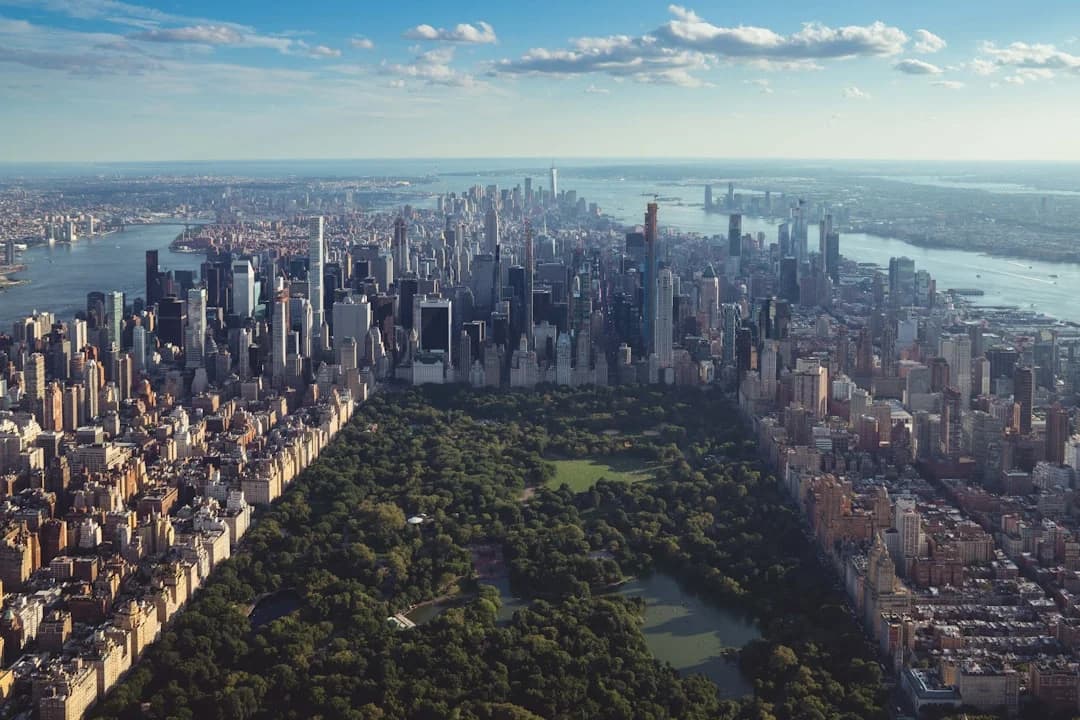
Photo by Jermaine Ee on Unsplash
The year 2026 marks a pivotal moment for New York City as planners unveil a data-driven push to grow the city’s tree canopy. Tied to a formal Urban Forest Plan released in April 2026, the initiative places Manhattan at the forefront of an ambitious effort to expand urban green cover, increase resilience to heat and flooding, and broaden access to nature across neighborhoods that have historically faced environmental challenges. The city’s central aim is clear: raise the canopy citywide to 30 percent by 2040, a substantial leap from current levels and a foundational step toward healthier streets, cooler summers, and more vibrant urban ecosystems. The plan layers in precision metrics, funding pathways, and community engagement strategies designed to ensure measurable progress across all five boroughs, with particular emphasis on Northern Manhattan and other areas where canopy gaps are most pronounced. (ny1.com)
In parallel, a philanthropic partnership and a wave of community-driven projects are accelerating on-the-ground canopy gains, including high-profile efforts in Manhattan’s northern neighborhoods. A recent collaboration announced on April 15, 2026 between the New York Restoration Project (NYRP) and the Novogratz Family Foundation aims to expand and restore the city’s urban tree canopy, starting in Northern Manhattan and extending across the five boroughs. The initiative signals a broader trend of private sector and foundation involvement in municipal forestry, complementing public funding and government-led planning. This momentum comes as city agencies highlight opportunities to deploy micro-forests and other dense-planting approaches as part of a diversified toolkit for canopy expansion, particularly in densely built environments where traditional tree-planting is constrained by space and soil conditions. (nyrp.org)
The urban forestry conversation in 2026 also reflects a heightened focus on governance, maintenance, and equity. City officials and auditors emphasize that while canopy expansion is essential for climate resilience, it must be paired with sustained investment in care, equitable access, and transparent measurement. A major citywide funding and management assessment released in April 2026 underscores the need to align urban forest investments with climate goals, aging infrastructure, and the demands of underserved communities that often bear the highest heat and flood risks. As Manhattan-specific programs accelerate, observers will watch how funding frameworks, governance structures, and interagency collaboration translate into tangible canopy gains in neighborhoods across the borough. (comptroller.nyc.gov)
Opening: Manhattan urban canopy expansion and micro-forests 2026 is shaping up as more than a tree-planting push. It’s a data-driven, equity-focused, multi-year program that blends public policy, philanthropic capital, and community action to redefine the city’s climate resilience and micro-urban landscape. The approach recognizes trees not only as scenic assets but as infrastructure that cools streets, improves air quality, supports biodiversity, and enhances property values and neighborhood quality of life. In Manhattan, where dense development and aging infrastructure intersect with vibrant urban life, the plan’s focus on micro-forests—dense plantings designed to accelerate canopy formation in constrained spaces—speaks to a practical strategy for increasing green cover in places where traditional tree rows cannot easily fit. The 2026 moment also provides a crucial lens into how technology, data analytics, and market forces are aligning to support a more sustainable, healthier city for residents and businesses alike. (ny1.com)
What Happened
Timeline and Key Milestones
- April 15, 2026: The Novogratz Family Foundation, via New York Restoration Project (NYRP), announce a major gift and collaboration to expand and restore New York City's urban tree canopy, beginning in Northern Manhattan and extending citywide. This partnership signals a model where philanthropy complements public funding to accelerate canopy gains in underserved communities. (nyrp.org)
- April 21, 2026: New York City unveils its first Urban Forest Plan, a citywide framework designed to preserve existing canopy, scale up tree planting, and cultivate a robust network of stewards for the urban forest. The plan is led by the Mayor’s Office of Climate & Environmental Justice (MOCEJ) in collaboration with NYC Parks, the Nature Conservancy, and a coalition of public and civic partners. A central goal is to reach a 30 percent canopy cover citywide by 2040. This launch marks a formal, cross-agency commitment to urban forestry as essential infrastructure. (ny1.com)
- April 2026 onward: The Comptroller’s Office issues a report examining funding and management for NYC’s urban forest, highlighting that continued investment is needed to meet climate and equity objectives, while noting progress in canopy expansion and the challenges of ongoing maintenance. The report frames urban forestry as living infrastructure with long-term financial and environmental benefits, and it stresses the importance of reliable funding to sustain gains over decades. (comptroller.nyc.gov)
- March–April 2026: City agencies and partner organizations begin implementing pilot projects and community programs designed to translate the plan’s targets into visible improvements on the ground. Notable efforts include restoration activities in Manhattan’s West Harlem, as part of a broader canopy expansion strategy, and the initiation of targeted tree-planting campaigns in priority neighborhoods. (riversideparknyc.org)
How the Announcement Was Framed
City officials describe the Urban Forest Plan as a multi-faceted blueprint aimed at preserving existing canopy, expanding green cover through targeted planting, and strengthening community stewardship of urban trees. The plan emphasizes equity—ensuring that neighborhoods historically underserved by green infrastructure receive priority attention and meaningful access to nature. External partners, including foundations and non-profit organizations, are positioned to complement public investments by funding tree-planting efforts, providing technical assistance, and facilitating community engagement. The framing positions trees as core climate infrastructure—an approach that aligns with recent environmental policy thinking in major cities and with the broader science of urban forestry. (wxystudio.com)
The Micro-Forest Concept in a Dense City
A notable aspect of the 2026 urban forestry conversation is the increased interest in micro-forests, also known as tiny or Miyawaki forests, as a design solution for space-constrained urban landscapes. Micro-forests deploy dense plantings of native species in compact footprints to accelerate canopy development, improve biodiversity, and deliver rapid cooling benefits. While the concept has gained traction nationwide, observers point to New York City as a critical proving ground given its dense mix of high-rise development and limited pervious ground. Environmental organizations describe micro-forests as an effective complement to traditional street-tree programs, offering a scalable option for densely populated neighborhoods where space is at a premium. Audubon highlights how micro-forests are proliferating in urban centers, including New York City, and underscores their benefits for birds and urban ecology. (audubon.org)
The Manhattan Focus: Northern Manhattan and Beyond
Manhattan’s northern neighborhoods — including Upper Manhattan and Harlem — are highlighted as priority areas for canopy expansion due to existing deficits in tree cover and higher urban heat exposure. The NYRP’s Northern Manhattan initiative, catalyzed by the Novogratz gift, explicitly targets expanding canopy in this region, signaling a tangible early testbed for the plan’s equity-focused philosophy. The Riverside Park restoration project in West Harlem, announced in April 2026 with private funding, further demonstrates how public and private partners are coordinating to transform Manhattan’s urban forest with larger, multi-acre restoration and reforestation efforts. These efforts illustrate how the plan translates into concrete changes in specific neighborhoods, providing a blueprint for replication citywide. (nyrp.org)
The Broader Citywide Context
New York City’s Urban Forest Plan sits within a broader municipal strategy to treat canopy expansion as essential infrastructure. The plan builds on decades of urban forestry work and is tied to Local Law 148 of 2023, which mandates equitable canopy growth and provides governance mechanisms for cross-agency coordination. City agencies emphasize that expanding canopy is a climate resilience measure with health, energy, and economic co-benefits for residents and businesses alike. The plan also aligns with ongoing state and city efforts to quantify and monitor canopy change, integrate data-driven decision-making, and maintain a transparent, auditable approach to funding and implementation. (wxystudio.com)
Why It Matters
Environmental and Climate Benefits

The Urban Forest Plan frames canopy expansion as a central strategy for mitigating urban heat island effects, reducing energy demand, improving air quality, and supporting biodiversity in a dense metropolitan setting. Urban trees provide measurable cooling through shade and evapotranspiration, helping to counter rising summer temperatures and reduce energy burdens for residents. The plan’s emphasis on data-driven targets, including a citywide 30 percent canopy by 2040, reflects a shift toward measurable, accountable climate action, with New York City positioned as a national model for urban forestry policy. Independent analyses and city-backed assessments point to substantial environmental benefits from expanded tree cover, particularly for neighborhoods facing the strongest heat stress and flood risk. (forestforall.nyc)
Equity and Community Impacts
A hallmark of the 2026 Urban Forest Plan is its emphasis on equity. The plan recognizes that canopy gains historically unevenly distributed across the city, with some communities enjoying robust green infrastructure while others bear disproportionate heat and pollution exposure. By prioritizing Northern Manhattan and other underserved areas for early canopy expansion and micro-forest deployment, the city aims to close this gap over time. Community engagement and stewardship are positioned as core components of implementation, ensuring residents have opportunities to participate in planting, monitoring, and education programs. The Comptroller’s analysis reinforces the view that maintaining and expanding canopy requires sustained funding and governance to realize these equity aims. (forestforall.nyc)
Economic and Real Estate Implications
Canopy expansion is not only an environmental policy; it also interacts with real estate values, neighborhood branding, and resilience planning. In Manhattan, where real estate markets are sensitive to climate risk and urban livability metrics, more green space can influence consumer perceptions, attract investment, and potentially boost property values in canopy-rich districts. The plan’s emphasis on “living infrastructure” aligns with a growing body of research suggesting green investments can yield tangible economic and health dividends for communities, especially when paired with long-term maintenance funding and performance metrics. The Comptroller’s report emphasizes that the long-term economic case for urban forestry depends on reliable funding streams and clear accountability, rather than one-off grants or sporadic planting campaigns. (comptroller.nyc.gov)
Technology, Data, and Market Trends
From a technology and market perspective, the Manhattan-focused canopy expansion represents a convergence of data analytics, green infrastructure finance, and environmental, social, and governance (ESG) investing. Cities increasingly rely on high-resolution canopy mapping, soil and moisture sensors, and robust performance dashboards to guide where planting yields the highest value and resilience. Private foundations and corporate donors are expressing increased interest in funding urban forestry projects with measurable outcomes, further integrating the forest sector with urban planning and real estate markets. The Urban Forest Plan was developed with input from planning and design firms, reflecting a modern, multidisciplinary approach to urban forestry that blends policy, architecture, ecology, and finance. (wxystudio.com)
What's Next
Implementation Roadmap and Milestones
The 2026 Urban Forest Plan provides a phased approach to canopy expansion, prioritizing maintenance and replacement of aging trees, expanding planting in under-canopied neighborhoods, and leveraging micro-forest deployments where space is limited. The plan anticipates a multi-decade timeline with annual progress milestones, annual reporting, and a governance framework that coordinates across NYC Parks, MOCEJ, the City Council, community-based organizations, and private partners. Early actions in 2026 include initiating Northern Manhattan canopy expansion programs, launching micro-forest pilots in select neighborhoods, and expanding public-private partnerships to accelerate planting and maintenance cycles. Expect continued release of data dashboards and public briefings to track canopy gains by borough and neighborhood, with quarterly updates to reflect ongoing projects and adjustments based on monitoring results. (urbanforestplan.nyc)
What to Watch For
- Cloud-based canopy data and dashboards: As the city scales its data collection, residents and researchers will have greater visibility into canopy change over time, enabling independent verification of progress toward the 2040 target. The NYC Open Data ecosystem supports this ongoing measurement work, and city agencies are expected to publish year-by-year canopy change analyses. (nyc.gov)
- Micro-forest rollouts: Micro-forests are likely to appear in more dense urban blocks, with pilots informing best practices for species selection, soil remediation, and long-term survival in Manhattan’s built environment. The Audubon analysis highlights how micro-forests can deliver rapid ecological benefits in cities, offering a blueprint for NYC’s implementation strategy. (audubon.org)
- Private sector and philanthropic mobilization: The NYRP–Novogratz partnership signals a broader trend of private capital aligning with public forestry goals. Expect more philanthropy-driven canopy projects to emerge in neighborhoods facing the greatest climate risks and canopy gaps. (nyrp.org)
- Maintenance and governance challenges: As the scale of planting grows, maintenance, pruning, and long-term care become pivotal to sustaining benefits. The Comptroller’s report emphasizes that without durable funding and governance, canopy gains can stall or erode, underscoring the need for a virtuous funding cycle. (comptroller.nyc.gov)
Manhattan-Specific Scenarios and Implications
Manhattan’s dense urban fabric makes canopy expansion both urgent and complex. In Highbridge Park and other parts of Northern Manhattan, canopy gains can yield immediate local benefits—reducing heat stress on streets, improving air quality, and enhancing stormwater management in highly impervious districts. The Riverside Park West Harlem restoration example illustrates how multi-year restoration projects can serve as testbeds for larger canopy expansion concepts, integrating forest management with public amenities, recreation, and climate resilience. As NYC pursues a 30 percent canopy by 2040, Manhattan’s experience will likely influence citywide policy refinements and funding allocations, including how micro-forest pilots are scaled, how soil remediation and tree-planting are coordinated with transit-oriented development, and how community organizations participate in ongoing stewardship. (riversideparknyc.org)
Closing
New York City’s 2026 urban forestry push presents Manhattan with an opportunity to redefine urban life through climate-smart green infrastructure. The combination of a formal Urban Forest Plan, private philanthropy backing Northern Manhattan canopy expansion, and targeted urban forestry projects across Harlem and West Harlem signals a new era for urban ecology in the borough. As the city lays out its path to 2040 and beyond, residents can expect a steady stream of data-driven updates, pilot programs, and community engagement efforts designed to deliver measurable canopy gains, improved resilience, and shared benefits across diverse neighborhoods. The convergence of policy, finance, and community action in 2026 marks a watershed moment for Manhattan urban canopy expansion and micro-forests, with implications that extend well beyond the borders of the city and into the broader national conversation on urban green infrastructure. Stay tuned as municipal agencies, nonprofits, and private partners translate the plan into tangible canopy increases, green neighborhoods, and a more resilient New York City for all. (ny1.com)
