Midtown Mixed-use Developments 2026: Living & Working NYC
A data-driven look at Midtown mixed-use developments 2026, mapping housing, office conversions, and transit-led planning in Manhattan.
 By
By 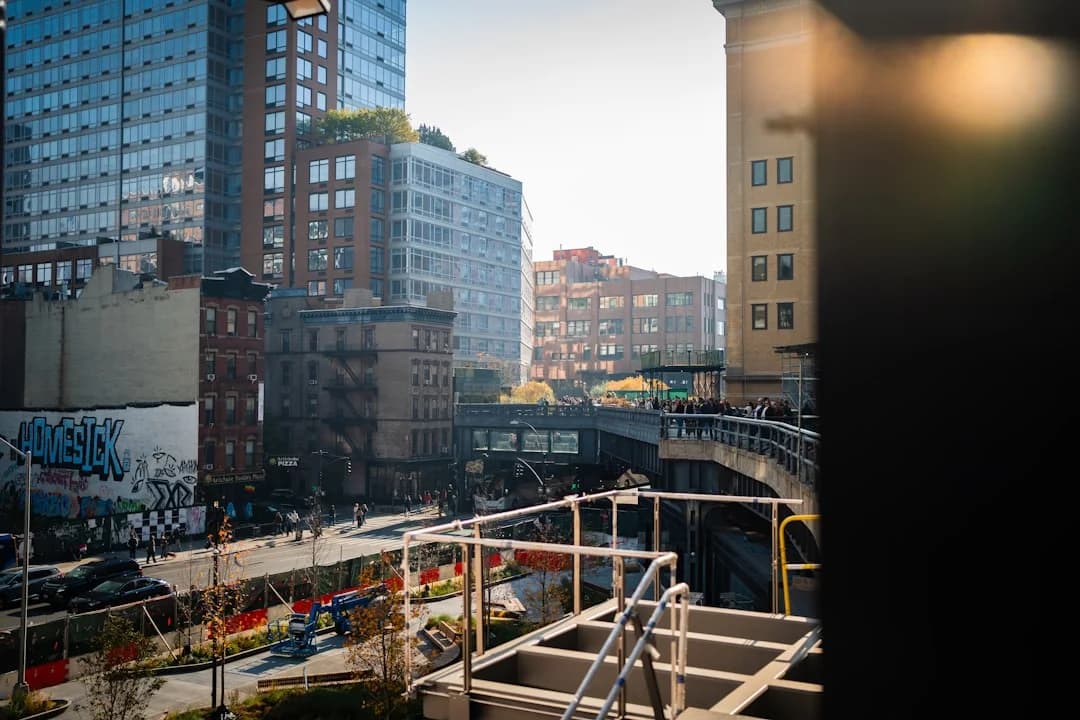
Midtown mixed-use developments 2026 are reshaping Manhattan’s core by weaving housing, workspaces, and public life into denser, transit-forward neighborhoods. The city’s recent rezonings and large-scale projects are accelerating a shift from a two-tier dynamic—central business district offices on one side and residential neighborhoods on the other—toward fully integrated live-work environments. In 2025, New York City advanced the Midtown South Mixed-Use Plan (MSMX), setting the stage for thousands of new homes in a single, walkable swath of Manhattan. This is more than a zoning map change; it’s a data-informed attempt to rebalance supply and demand in a borough where the housing shortage remains acute and office occupancy has moved toward greater flexibility, including residential conversions in some cases. The MSMX timeline and the practical steps taken by city agencies illustrate how policy, planning, and market signals are converging to produce what policymakers and developers describe as a 24/7, mixed-use ecosystem in Midtown South. (nyc.gov)
Beyond Midtown South, a set of marquee projects in Midtown East and adjacent corridors is compounding the momentum. The proposed 350 Park Avenue project—an electric, 62-story tower envisioned to replace three existing structures—has progressed through environmental review and planning channels, with the City Planning Commission and other authorities weighing land-use actions that would enable a public concourse, landmark considerations, and a significantly larger floor-area allowance. When fully realized, the project would add a major Class A office presence to Midtown East while contributing new public space and a broader streetscape program. The project’s scale and public-domain elements have drawn attention from governments and press alike, and while the timetable remains contingent on ULURP outcomes, observers view 2026 as a pivotal year for demolition and construction start in this corridor. (dec.ny.gov)
In Times Square, the transformation of 5 Times Square from office to mixed-use housing marks one of the most high-profile examples of policy-enabled urban redevelopment in Midtown. The project—approved by state and city authorities in 2025—will convert nearly 1 million square feet of office space into about 1,250 rental homes, including hundreds of permanently affordable units. Its timeline envisions construction beginning by the end of 2025 and the first phase completing around 2027, underscoring how policy instruments and market demand are aligning to convert central business district stock into housing while preserving transit access and essential services. (nyc.gov)
Technology and market dynamics are central to understanding these developments. Industry analyses highlight a sharp rise in office-to-residential conversions across New York City since the pandemic, with Midtown now accounting for a sizable share of new conversion activity. Observers point to policy incentives, including the 467-m Tax Incentive and the removal of the residential FAR cap, as well as new zoning tools that permit higher residential density in select districts. Taken together, these forces are driving a growing pipeline of conversions in the central business district, where traditional office footprints are being reimagined to better serve housing demand and mixed-use vitality. (cushmanwakefield.com)
The following sections summarize what happened, why it matters, and what to watch next as Midtown continues to evolve through 2026 and beyond. This coverage is grounded in the latest, verifiable data and official releases from New York City and state agencies, with careful attention to timelines, project scopes, and policy Context.
What Happened
MSMX: Public review kicks off and housing targets defined
A landmark development in Midtown Manhattan is the Midtown South Mixed-Use Plan (MSMX), a zoning framework designed to unlock housing opportunities across 42 blocks roughly bounded by West 23rd to West 40th Streets and Fifth to Eighth Avenues. The plan represents a deliberate shift from manufacturing-focused zoning to a more nuanced, mixed-use approach that explicitly contemplates housing alongside commerce, light manufacturing, and community facilities. The MSMX was certified to enter the Uniform Land Use Review Procedure (ULURP) in early 2025 and has been the subject of substantial public engagement and official documentation since then. The plan would deliver around 9,700 new homes, including up to 2,900 permanently affordable homes, by applying new high-density R11 and R12 districts and Mandatory Inclusionary Housing (MIH) requirements. In total, the package is designed to create a denser, more walkable Midtown South, anchored by transit access and a stronger street-level vitality. (nyc.gov)
The MSMX FAQ published in June 2025 provides a detailed explanation of the housing math, density rules, and MIH obligations. It confirms the 9,700-unit target and the 2,900 permanently affordable units, and it explains how MIH would be applied for the first time in Midtown Manhattan. It also addresses concerns about housing displacement and clarifies that the plan emphasizes conversions of underutilized spaces rather than outright demolitions. The document further describes how the new R11 and R12 districts increase FAR allowances in the densest areas to up to 18, while preserving a more modest density elsewhere to maintain neighborhood character. (nyc.gov)
In August 2025, the New York City Council approved the MSMX along with related housing and neighborhood investments, describing the plan as a major step toward addressing the city’s housing crisis in a dense, transit-rich submarket. The council release highlights that MSMX would deliver more than 9,500 housing units—significantly surpassing pre-policy housing baselines—and would bring hundreds of millions in community benefits and infrastructure investments. The approval also underscored the plan’s broader aims: to stimulate ground-floor retail, support garment and fashion industries, and strengthen street life through a stronger public realm. (council.nyc.gov)
Context: The MSMX initiative is part of a broader Manhattan-wide housing strategy that ties into the “Manhattan Plan” announced by the Adams administration, which seeks to add tens of thousands of new homes by reshaping zoning rules and accelerating housing production. The MSMX process thus serves as a touchstone for how policy choices in Midtown Manhattan are influencing the city’s housing dynamics. (nyc.gov)
350 Park Avenue: A 1,600-foot supertall in Midtown East moves through ULURP
Another focal point in Midtown’s mixed-use trajectory is the 350 Park Avenue project in Midtown East. This plan envisions a 1,600-foot-tall, 62-story tower that would deliver approximately 1.8 million square feet of office space, plus a new 12,500-square-foot public concourse and ground-floor retail. The project is designed to consolidate parcels across multiple blocks (including St. Patrick’s Cathedral and St. Bartholomew’s Church) through landmark transfer rights and zoning actions that would authorize higher density in the East Midtown Subdistrict. The project’s massing—replacing several older office buildings with a single, flagship tower—signals a push to maintain Midtown East’s status as a premier Class A office district while integrating new public realm elements. The ULURP process began with public review certification in early 2025, and the City Planning Commission, Manhattan Community Board 5, and City Council have since weighed recommendations and public input as part of the formal review timeline. If approved, demolition could begin in 2026, with construction following in the later 2020s and beyond. (6sqft.com)
Official documentation confirms the building’s proposed massing and program, including 1.6 million-plus square feet of office space, the need for transfer of development rights from nearby landmark sites, and the plan’s intent to add a publicly accessible concourse. The NYC Planning Commission’s docket and related environmental and community-board filings provide the granular details of the zoning actions and the required public space contributions, underscoring how the project blends private-scale redevelopment with enhanced public realm investments. (nyc.gov)
Notably, independent coverage and planning commentary emphasize the project’s role in reconstituting Midtown East’s skyline while preserving proximity to Grand Central and nearby landmarks. The New York State DEC Environmental Notice Bulletin (ENB) for the project documents the building’s scale, the associated transfer of development rights, and the anticipated public-concourse component that would help knit the tower into the surrounding streetscape. The ENB’s published details provide a precise massing framework and confirm the project’s public-concourse scope and related public realm investments. (dec.ny.gov)
5 Times Square: Office-to-housing transformation in Midtown’s hub
In Midtown West/Times Square, the 5 Times Square project represents a high-profile example of office-to-housing conversion, tying state and city policy changes to a concrete redevelopment plan. The transformation—approved in 2025—will convert roughly 917,745 square feet of office space into about 1,250 rental homes, with around 313 of those homes designated as permanently affordable. The project is expected to begin construction by the end of 2025, with the first phase completed around 2027, reflecting a relatively rapid ramp from planning to occupation in this central business district corridor. The Times Square project aligns with the broader “New York Action Plan” that seeks to unlock housing within central business districts and to use office vacancies as a lever for increasing the housing stock near transit hubs. (nyc.gov)
- In the policy narrative surrounding 5 Times Square, officials highlighted the 467-m tax incentive, the removal of the 12 FAR residential cap, and the Office Conversion Accelerator program as central tools enabling these conversions. The May 2025 announcement from the mayor and governor framed 5 Times Square as a leading example of coordinated city-state action to convert underutilized space into housing while preserving the district’s transit-oriented character. The plan’s emphasis on mixed-income housing and ground-floor retail reinforces the broader Midtown housing strategy and the push to reimagine the CBD as a 24/7 live-work environment. (nyc.gov)
The broader technology and market context of Midtown mixed-use developments 2026
The Midtown story is fundamentally about optimizing the use of land in a dense urban core through a combination of zoning reform, market-driven demand, and targeted public investments. Market observers point to a wave of conversions as a response to elevated office vacancies and the region’s housing shortage. Cushman & Wakefield’s 2025 analysis notes a sharp rise in office-to-residential conversions nationwide, with Midtown increasingly accounting for a substantial portion of post-2020 conversions and a growing share of Class A assets in the conversion pipeline. The report highlights policy incentives such as MIH and tax-based tools, alongside market dynamics like falling office values and stronger demand for residential space in central locations. This is precisely the dynamic that Midtown’s MSMX and adjacent projects are attempting to harness. (cushmanwakefield.com)
The practical effects of these policies are already visible in the market. Analysts and journalists have documented the increased pace of conversions, the emergence of new housing in central neighborhoods, and the continuing interest of institutions in backing mixed-use projects that combine housing with commercial and public realms. The MSMX’s emphasis on permanently affordable housing, live-work arrangements, and a strong public realm is consistent with a broader policy agenda to stabilize housing supply while sustaining the CBD’s economic vitality. (nyc.gov)
In addition to the policy machinery, observers note the technology and design dimensions of new/converted buildings. The push toward energy-efficient, all-electric campuses and smart-building technologies is evident in flagship Midtown projects and supersized towers. For example, JPMorgan Chase’s 270 Park Avenue—while not a residential project—highlights the move toward energy-efficient, all-electric office environments, a technological and sustainability signal that informs how developers think about future Midtown towers and conversions. While 350 Park, 5 Times Square, and MSMX are primarily housing-focused or mixed-use, their design and operation increasingly integrate smart systems, energy performance targets, and transit-oriented design practices that align with the CBD’s long-term resilience goals. (6sqft.com)
Why It Matters
Expanding housing in a central business district: housing supply, MIH, and density

Photo by Gabriel Francesco on Unsplash
Midtown mixed-use developments 2026 matter because they attempt to address a housing shortfall within a tightly constrained urban core. MSMX’s housing goal—about 9,700 new homes with up to 2,900 permanently affordable—reflects a deliberate approach to mix residential density with existing commercial activity. The MIH framework ensures a portion of new units will be permanently affordable, helping diversify the housing stock and reduce long-term affordability pressures in the heart of Manhattan. The plan’s rationale emphasizes proximity to transit, jobs, and amenities, enabling a broader set of New Yorkers to live near work and cultural hubs. This strategy aligns with the city’s stated aim to build more housing in high-opportunity areas while maintaining neighborhood character and sustainable urban form. (nyc.gov)
- The MSMX’s rezoning approach and its public-review trajectory reflect a broader municipal belief that the future of the CBD will be defined by the ability to offer diverse living options near major transit corridors. The August 2025 council endorsement reinforces the idea that the city views Midtown as a central arena for achieving its 10- to 15-year housing goals, particularly in the context of the City of Yes for Housing Opportunity and related state reforms that lifted the FAR cap and enabled higher residential densities in targeted districts. (council.nyc.gov)
Economic and employment implications: jobs, investment, and the public realm
Midtown mixed-use developments 2026 carry clear economic implications. The 350 Park Avenue project—if realized—would bring a substantial office footprint to Midtown East, creating tens of thousands of jobs over the life of the project and contributing to the CBD’s daytime and nighttime economic activity. On the housing side, Times Square’s 5 Times Square conversion underscores a shift in which a portion of the CBD’s high-vacancy stock can be repurposed to house workers and residents in proximity to shops, transit, and entertainment. The RESIDENTIAL component matters not only for housing supply but also for the CBD’s “live-work” dynamic, which can sustain retail and services during both business hours and after hours. Independent analyses and press accounts emphasize the importance of public investments tied to these conversions—such as improved streetscapes, transit upgrades, and public spaces—that can enhance the CBD’s attractiveness to employers, residents, and visitors. (6sqft.com)
- Observers also highlight the jobs dimension of Midtown conversions. For example, 350 Park Avenue is designed to accommodate a large workforce; 6sqft notes the project would host anchor tenants and a substantial employment base, underscoring how new tall towers in the CBD can redefine the local labor market, commute patterns, and employer footprints. The Times Square project similarly emphasizes the creation of thousands of construction and permanent jobs as part of the conversion, which has downstream effects on local spending, school enrollment, and transit demand. (6sqft.com)
Public realm, transit, and urban design: shaping the street-level experience
Midtown’s mixed-use strategy places a premium on public realm improvements and transit integration. MSMX contemplates a robust public realm program, including new plazas, access to ground-floor retail, and enhanced pedestrian connections that improve safety and walkability. The plan’s emphasis on a public-concourse model for 350 Park Avenue—and related public-space commitments—signals a broader design approach that seeks to knit taller towers into the city’s street grid, preserve landmark elements, and create inviting spaces that can be activated by workers, residents, and visitors alike. The policy framework also aligns with Broadway Vision efforts and the Park Avenue subarea improvements that accompany East Midtown rezonings, reflecting a citywide strategy to fuse density with open space and public access. (nyc.gov)
- The technology angle enters the design and operation of these spaces through energy performance and smart-building capabilities. With the rise of office-to-residential conversions, developers are increasingly adopting energy-efficient systems, electrified building services, and advanced building-management platforms to meet evolving performance standards and tenant expectations. The Midtown cluster’s emphasis on sustainable infrastructure—illustrated by the all-electric profile of leading CBD towers like 270 Park Avenue—signals ongoing investor and operator preference for technologies that reduce energy costs and carbon footprints. While not every project is all-electric, the trajectory toward energy-conscious design and operation is evident in both new development and conversion contexts. (6sqft.com)
The policy backbone: incentives, zoning, and the path to 2026 and beyond
A common thread across Midtown mixed-use developments 2026 is policy-enabled density and housing opportunities. The MSMX relies on higher-density districts (R11 and R12) allowed by changes to the FAR regime that lift prior caps and permit a mix of uses that include housing, light manufacturing, and office space. The MIH framework ensures a housing component that is permanently affordable, addressing equity goals while enabling higher-density development. The Times Square and 5 Times Square initiatives likewise showcase the interplay between state incentives (such as the 467-m tax program) and local zoning changes that together unlock new forms of urban redevelopment in strategic locations. The city and state’s collaborative push—through Mayor Adams’ “Manhattan Plan,” the Office Conversion Accelerator, and related policy tools—signals a sustained effort to reshape the CBD’s growth trajectory through 2026 and into the next decade. (nyc.gov)
What’s Next
Near-term milestones to watch in 2026
The year 2026 stands as a critical hinge for Midtown mixed-use developments 2026. For 350 Park Avenue, ULURP actions and public-approval milestones in 2025-2026 will determine whether the project advances toward demolition and construction in the near term. While demolition dates have been referenced in press coverage and planning documents, the formal schedule depends on the City Planning Commission and City Council votes, along with landmark-consideration processes for the transfer of development rights from St. Patrick’s Cathedral and St. Bartholomew’s Church. If the approvals proceed as anticipated, demolition could begin as early as 2026, setting the stage for a long construction program that could run into the early 2030s. The public concourse and built-environment commitments will be closely watched by neighborhood groups and business associations seeking to balance growth with heritage preservation. (6sqft.com)
The MSMX’s 2025 council approval establishes a near-term baseline for the plan’s ULURP process, which includes community-board input, Manhattan Borough President review, CPC hearings, and City Council votes. The seven-month ULURP cycle is a predictable cadence that usually commences soon after certification, with public hearings and formal votes shaping the final zoning actions. Observers will be watching how this timeline aligns with broader city housing goals and how public investments flow alongside private development. (nyc.gov)
In Times Square and Midtown West, the 5 Times Square conversion is already advancing, with construction expected to begin by late 2025 and to deliver housing in a central hub of transit and tourism activity by the late 2020s. This project’s execution will set a precedent for similar conversions and could influence investor sentiment toward CBD redevelopments that combine housing and retail with preserved landmark contexts. (nyc.gov)
Longer-term outlook: policy momentum, market transformation, and technology integration
Looking beyond 2026, Midtown mixed-use developments 2026 are likely to be defined by continued policy momentum and evolving market fundamentals. The city’s housing plans—coupled with the state’s incentives-and-approvals framework—should sustain a pipeline of conversions and new-builds totaling tens of thousands of units across Manhattan in the next 5–10 years. The MSMX’s emphasis on 9,700 housing opportunities, including a significant share of permanently affordable units, points to a structural shift in Midtown’s housing supply, with implications for rent levels, vacancy dynamics, and demographic composition. The 350 Park Avenue project’s scale, alongside the Times Square transformation, demonstrates how large, flagship towers can anchor a broader live-work ecosystem in the CBD, scaling the CBD’s capacity to accommodate growth while preserving public space and facilitating transit usage. (nyc.gov)
Market observers anticipate ongoing office-to-residential conversions to stay at the center of Midtown’s growth strategy, particularly as office stock modernizes and remote/hybrid work patterns persist. Cushman & Wakefield’s 2025 analysis emphasizes heightened conversion momentum and the role of policy instruments in accelerating these projects, suggesting that Midtown could continue to lead the city in high-density conversions in the years ahead. This trajectory reinforces the notion that Midtown mixed-use developments 2026 are not isolated milestones but part of a sustained urban transformation supported by both policy and market demand. (cushmanwakefield.com)
From a technology perspective, developers are integrating advanced building-management systems, energy-efficiency measures, and data-driven design to ensure that new and converted spaces meet modern tenant expectations while managing operating costs. The all-electric approach seen in leading CBD towers signals a broader trend toward decarbonization and grid-friendly operations, with potential implications for energy procurement, demand response, and on-site generation in mixed-use towers. In practice, this means Midtown’s new and converted developments will likely be among the city’s most technologically sophisticated assets, leveraging smart controls, occupancy analytics, and energy dashboards to optimize performance. (6sqft.com)
Closing: staying updated in a fast-moving landscape
As Midtown mixed-use developments 2026 unfold, readers should watch for ULURP milestones, construction timelines, and the evolving public realm investments that accompany new towers and conversions. MSMX’s housing targets, 350 Park Avenue’s massing and public-concourse provisions, and Times Square’s 5 Times Square transformation offer a coherent trio of case studies illustrating how policy, market demand, and design are converging to redefine Midtown Manhattan’s living and working environment. The coming years will determine not just how many homes are added, but how the CBD preserves its iconic character while creating more integrated, transit-rich neighborhoods that work around the clock.

Photo by David Vives on Unsplash
To stay updated, follow official city sources for MSMX and 350 Park Avenue ULURPs, plus major project milestones reported by reputable outlets and city-affiliated agencies. The MSMX FAQ and the NYC planning department’s project pages provide primary details on housing targets and zoning changes, while council and mayoral releases highlight milestones and public investments tied to these developments. For broader market context, track analyses from Cushman & Wakefield and comparable firms that document conversion momentum, vacancy trends, and investment flows in Midtown Manhattan. Together, these sources offer a data-driven view of how Midtown mixed-use developments 2026 are reshaping living, working, and moving through Manhattan’s core.
“We envision for Midtown South a vibrant and dynamic, 24-7 neighborhood with a strong commercial core right alongside brand-new homes for New Yorkers.” — Midtown South Mixed-Use Plan statement, NYC Department of City Planning (as cited in MSMX materials). (nyc.gov)
“350 Park Avenue would deliver 1.8 million square feet of office space, a public concourse, and a massing that reflects Midtown East’s role as a premier office district while integrating new public amenities.” — 350 Park Avenue project materials and CPC documentation. (6sqft.com)