New NYC restaurant openings 2026: A data-driven journey

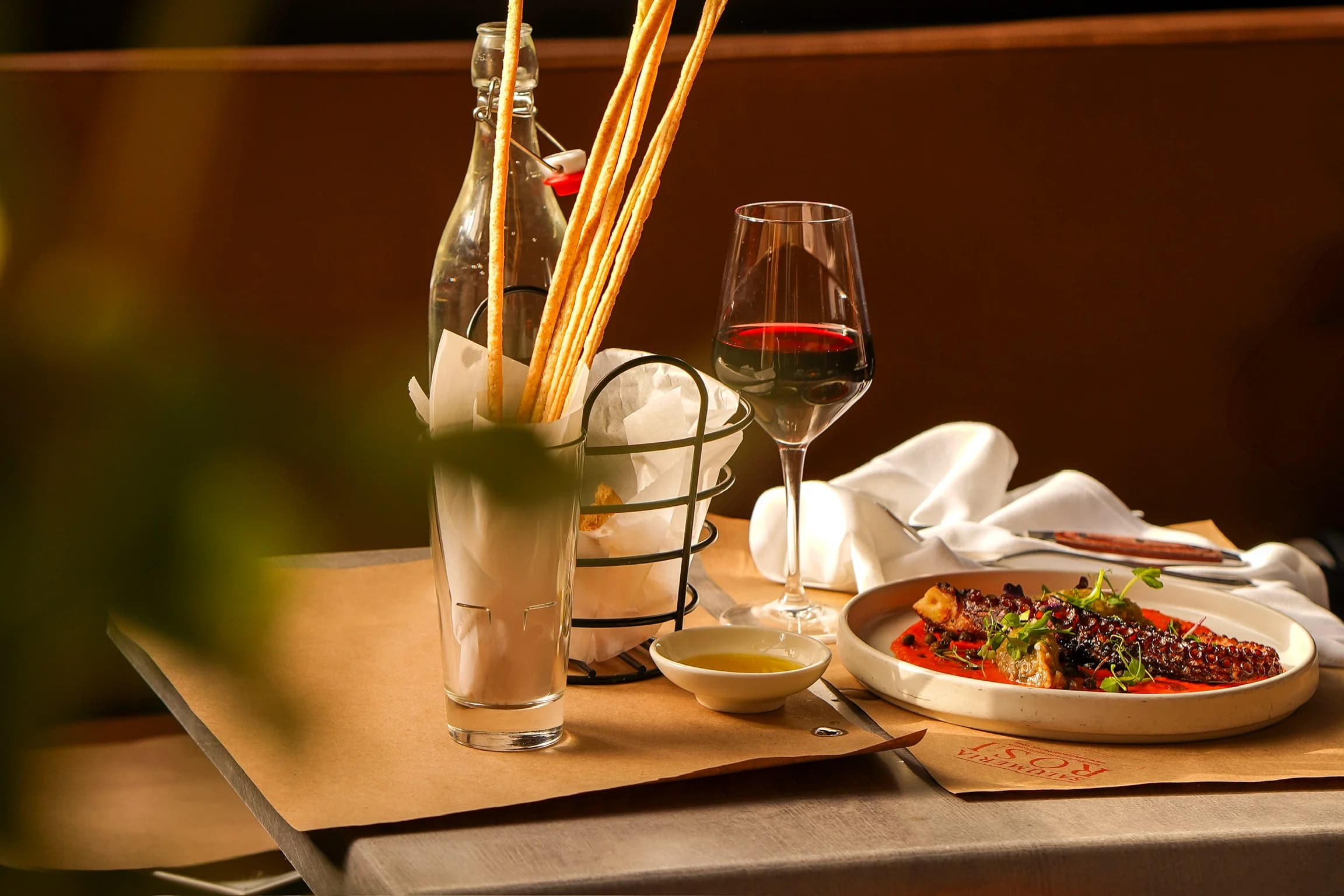
The phone buzzed as evening settled over Manhattan: a flurry of alerts about the city’s newest dining destinations, from a salon-toned East Village expansion of a Salumeria Rosi to buzzy, global concepts landing near Hudson Yards. In a year steeped in headlines about inflation, delivery wars, and the appetite for experiential meals, the phrase New NYC restaurant openings 2026 isn’t just a list of names. It’s a live ledger of how technology, real estate quirks, and evolving consumer expectations intersect in one of the world’s most dynamic dining ecosystems. As I walked toward the glowing windows of a building on Sixth Avenue, I felt the season’s mood—optimistic, data-informed, and relentlessly experimental. The city isn’t simply reacting to trends; it’s testing them in real time, with new concepts serving as both competitors and case studies. This is the data-driven narrative of New NYC restaurant openings 2026, a story about how guests, operators, and the broader market are learning to coexist in a more complex hospitality landscape. (ny.eater.com)
The morning after, a street-level mosaic of doorways and menus begins to tell the larger story. In Manhattan, a handful of openings this January offered a first glimpse into a year defined by high-concept gastronomy and high-velocity operations. At Salumeria Rosi’s East Village outpost, the day started with croissants and panini before expanding into pasta and wine—the kind of shift that signals how existing brands leverage new spaces to test scalability while preserving core identity. In the same week, Mixue’s Times Square debut underlined a broader appetite for ultra-accessible concepts that can flood the market and reshape foot traffic patterns. These openings—documented in detail by Eater’s January 2026 roundup—frame the broader debate: how many new seats can the city absorb, and at what price? These questions sit at the core of New NYC restaurant openings 2026 as a data-driven phenomenon rather than a purely aspirational narrative. (ny.eater.com)
Opening the door to this year’s conversation, we’ll trace a narrative arc that blends on-the-ground reporting with market signals: the Beginning, the Journey, the Resolution, and the Lessons. This isn’t a simple chronicle of restaurants; it’s a ledger of how technology, real estate, and changing dining values shape what shows up on Manhattan’s streets and menus. The aim is to illuminate not just what opened, but why it opened, and what those choices say about the broader economy of food in 2026. The data we lean on comes from industry trackers and credible outlets that are cataloging openings as they happen, from the January heat map to the season’s most anticipated projects. In short, this is the story of New NYC restaurant openings 2026 told through scenes, numbers, and the voices of operators negotiating a new normal. (ny.eater.com)
The Beginning
A map of new voices
A Brooklyn-to-Manhattan migration of concepts
A boldly mixed neighborhood mosaic
The steady drumbeat of permits and previews
In January 2026, the city’s openings read like a map of who’s trying to fill space with meaning. Brooklyn’s Confidant moved into a revived Atlantic Avenue space, signaling a trend toward elevating neighborhood staples into destination experiences. The plan included a companion all-day bakery and pizza concept, Lou & Bev’s, next door—an example of how restaurateurs layer ventures to build ecosystems rather than one-off concepts. The report paints a picture of a market leaning into multi-venue footprints, where the risk is spread across related concepts rather than a single hero brand. This is precisely the kind of multidimensional strategy that makes New NYC restaurant openings 2026 a data-rich narrative, offering a lens into how operators balance risk, scale, and brand coherence. (ny.eater.com)
The rise of cross-neighborhood experiments
A guest list of international influences on local soil
Another early signal came from a wave of foreign-leaning concepts entering prime Manhattan and Brooklyn spaces. Or’esh, a Mediterranean restaurant from Catch Hospitality Group’s fold, leans into Levantine cooking with a focus on fire and wood, hinting at a broader move toward culturally specific, experience-driven menus in luxury-adjacent settings. Meanwhile, Saverne, a wood-fired Alsatian brasserie, anchors the Hudson Yards complex The Spiral, illustrating how a tower’s office-anchored demand can support a high-traffic dining anchor. The openings illustrate a pattern: when developers couple office revamps or luxury towers with culinary statements, the risk is offset by a built-in audience while the brand risk remains a feature of the experience. Data from Eater’s 2026 preview highlights Saverne and Oriana as emblematic of this approach, with Giorgia Kreuther and others weaving traditional regional cooking into New York’s modern dining lexicon. (ny.eater.com)
The inciting incident: a rotating door of formats
The January lineups reveal a mix of formats—bakery-pastry counters tucked near high-traffic corridors, fine-dining tasting rooms above street level, and fast-casual or hybrid concepts attached to markets or office corridors. This is not a story about a single trend but several converging at once: the return of the all-day, deep-dive restaurant that pairs a refined kitchen with a vibrant bar; the expansion of a classic brand into a second New York site; and the emergence of new regional or national players testing Manhattan as a proving ground for scale. The cumulative effect is a dynamic that’s not just about “another restaurant opening” but about how operators test demand, manage supply, and calibrate guest experiences in a city with high expectations and finite real estate. (ny.eater.com)
The Journey
The journey begins with data and dialogue
Grounding the story in the numbers

The voices at the door and behind the pass
A closer look at the January heat map
The city as a restaurant laboratory
The Journey takes us through the first few months of 2026, where openings aren’t just about kitchens and forks; they’re about workforce dynamics, real estate cycles, and the way technology folds into guest interactions. Eater’s coverage of January and February 2026 provides a granular view of where pressurized demand is meeting supply: Salumeria Rosi’s East Village expansion suggests how established brands use new spaces to scale their cured-meats and Italian fare while preserving the original concept’s atmosphere. The same piece notes that other neighborhoods welcomed new faces—from Park Slope’s Dok to Noho’s Croft Alley—each location carried its own local story, its own menu evolutions, and its own entry price to balance quality and volume. It’s a reminder that in 2026, the city’s openings are a chorus of micro-narratives that, together, describe a broader market dynamic. (ny.eater.com)
The tech thread begins to show
Reservation systems, automation, and the guest journey
Beyond the menus, a stronger subtext emerges: technology is increasingly a differentiator, not a background detail. Restaurants are integrating reservation software, hospitality-automation tools, and CRM data to tailor guest experiences, optimize staffing, and manage inventory with level-headed precision. Industry-forward analyses point to AI and integrated POS-CRM ecosystems as a new baseline for profitability and guest satisfaction. While some openings lean into spectacle, others lean into streamlined, tech-enabled operations that promise faster seating, accurate orders, and personalized recommendations. As the data points accumulate, the theme becomes clear: in 2026, technology is a table-stakes feature that can tilt outcomes—not just a back-of-house convenience. (revmo.ai)
Market signals and consumer sentiment
The weight of the wallet, the speed of service, and the hunger for novelty
Market signals also point to a broader question: how will diners balance appetite for novelty with concerns about price and value? The financial and consumer press have highlighted inflation pressures and consumer demands for more value-driven menus, sometimes pushing operators toward smaller portions or more affordable formats without sacrificing experience. The Financial Times recently highlighted how the industry is rethinking portion sizes and pricing in response to economic pressures and the rising visibility of wellness trends, a tension that NYC operators must navigate in 2026. While the conversation often centers on the economics, it’s important to pair it with on-the-ground reporting about what guests actually order, how long they wait, and what keeps them returning. In New NYC restaurant openings 2026, these factors play a key role in predicting which openings will endure beyond the initial buzz. (ft.com)
A turning point: flagship projects and neighborhood anchors
The emergence of multi-concept hubs
A recurring theme in the journey is the rise of multi-concept hubs—spaces that host a combination of restaurants, bakeries, and bars under one roof or within adjacent spaces. The idea is not new, but the execution matters: a project like Confidant moving into a Brooklyn Heights locale alongside Lou & Bev’s sets a template for community-building and cross-traffic. In Manhattan, the Saverne/Guste/Or’esh cluster near Hudson Yards and Nolita demonstrates how a single building or neighborhood can host a spectrum of dining experiences that reinforce one another. This approach appears to be a deliberate strategy among operators who want to create a “city within a city” experience that can absorb a wide range of guests, from corporate lunch crowds to after-hours seekers. The Eater 2026 previews offer a corridor-level lens on how multi-concept hubs might shape the city’s dining economy going forward. (ny.eater.com)
The Resolution
A turning point in guest expectations
The balancing act of scale, quality, and identity
As we move deeper into 2026, the restaurants that survive will be the ones that effectively balance scale with a consistent identity. Some of the year’s most anticipated openings—such as a grand French brasserie from Daniel Boulud’s team near Lincoln Center, Brasserie Boulud, and Oriana in Nolita—are test cases for translating a chef’s or brand’s authority into a physically expansive space without losing the intimate, craft-driven energy that draws guests in the first place. The season’s early previews suggest that the city will reward those who maintain strong culinary storytelling even as menus expand and service models modernize. This is a core tension in New NYC restaurant openings 2026: the drive to scale must be matched with a discipline around authenticity and guest connection to avoid dilution of the brand’s essence. (ny.eater.com)
The guest experience as data
The operational tightrope: speed, accuracy, warmth
In practice, the most successful openings will be those that blend human warmth with data-driven efficiency. AI-forward engagement and automated reservations promise to reduce friction, but guests still crave authentic conversations with chefs and servers who understand their preferences. The journey of 2026 indicates that operators who invest in both high-touch hospitality and high-tech operations—without letting one overshadow the other—will likely outperform those leaning too heavily in either direction. Early-year openings have already demonstrated both models; the challenge for the rest of the year will be to learn from these pilots and adapt quickly. (revmo.ai)
A sense of balance and forward motion
The city remains a living lab
The narrative of New NYC restaurant openings 2026 isn’t a victory lap for any single brand. It’s a portrait of a city that treats dining as a continuous experiment—one where permits are signed, kitchens are kitted, and guest reactions carry the most meaningful feedback. The openings documented in January and February 2026 show a maturing market that’s comfortable with risk but increasingly data-informed in its decision-making. This isn’t about chasing every trend; it’s about crafting experiences that are timely, authentic, and scalable—the kind of balance that sustains a city’s culinary imagination through 2026 and beyond. (ny.eater.com)
The Lessons
takeaways
Lessons for operators and readers alike
How to translate data into delicious, durable experiences
-
Start with the neighborhood story, then layer in a concept’s data signals. The January openings show how established brands leverage new spaces to expand identity, while new entrants test the air in different districts. Operators should map neighborhood dynamics and test ideas in a controlled way, using data to decide when to scale. The Confidant relocation and Lou & Bev’s next door plan illustrate how multi-venue strategies can work when integrated with a clear brand narrative. (ny.eater.com)
-
Embrace technology as a guest-experience enabler, not a substitute for hospitality. The tech thread—integrated POS/CRM, AI-driven guest engagement, and streamlined reservations—will increasingly define the guest journey. Restaurants that invest in tech to speed seating and accuracy while maintaining human warmth will win loyalty in a crowded market. The AI and automation themes circulating in industry analyses underscore this dynamic as core to 2026 expectations. (revmo.ai)
-
Design menus and formats to respond to broader economic signals without sacrificing culinary storytelling. The market conversation around portion sizes, pricing, and value is not going away. Operators who bundle compelling narratives with cost-conscious, transparent menus will be best positioned to attract both daily diners and special-occasion guests. The Financial Times’ coverage of affordability pressures and the trend toward value-aligned menus provide a useful frame for decision-making in 2026. (ft.com)
-
Build resilience through diversified formats and collaboration. The emergence of multi-concept hubs and cross-brand collaborations suggests a path to resilience: spaces that host a spectrum of dining experiences can adapt to shifting demand and occupancy patterns. Observing how new openings anchor to office towers, transit hubs, or major neighborhoods provides a blueprint for future iterations and risk management. This is a recurring pattern in the season’s previews and openings. (ny.eater.com)
-
Track openings as a living dataset, not a single story. The year’s openings—ranging from high-profile names to neighborhood staples—offer a moving data set about consumer appetite, developer priorities, and the interplay of real estate and gastronomy. As a reader, you can treat the openings as a live signal about where the market is headed, not just where it has been. The January and February reports from Eater NY serve as a benchmark to gauge how the market is evolving week by week. (ny.eater.com)
Closing
The city is a perpetual experimenter, and New NYC restaurant openings 2026 epitomize that spirit. The early weeks of the year offered a spectrum of experiments—globe-spanning concepts testing resilience in busy corridors, and neighborhood staples expanding to new blocks to test scale without losing identity. The threads connecting all these narratives are clear: a demand for compelling storytelling, a necessity for hospitality that feels both human and efficient, and an industry increasingly comfortable with technology as a partner, not a replacement. As the year unfolds, Manhattan Monday will continue to illuminate these stories, weaving data, dialogue, and diverse guest experiences into a living picture of what dining can be in 2026.
What began as a handful of openings in January has grown into a broader tapestry: a city that treats each new space as a data point, a scene, and a possibility. The lessons learned from the year’s first chapters—about balancing novelty with value, and about the role technology plays in shaping guest journeys—will inform not just which restaurants survive but how they can thrive in a marketplace that remains both intensely competitive and remarkably creative. The dining landscape of New York City remains as alive as the streets themselves, a living story told one opening, one guest, and one review at a time. And in that story, the keyword New NYC restaurant openings 2026 isn’t merely a search term; it’s a compass guiding readers toward the year’s most meaningful, measurable shifts in the way we eat, celebrate, and connect.