NYC gallery openings 2026: Top Picks

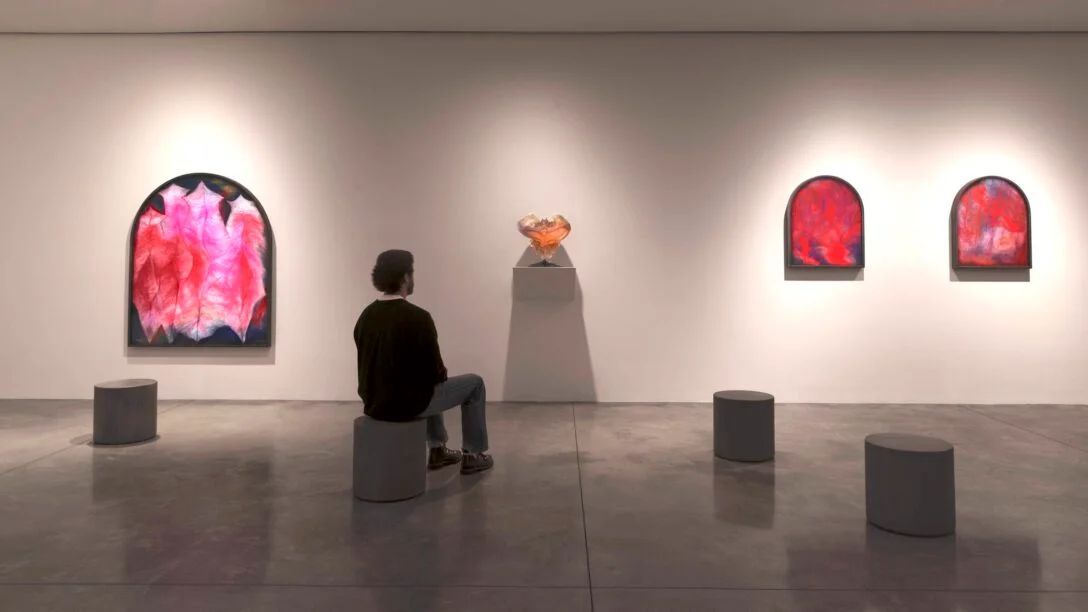
The New York City art scene in 2026 is a dynamic blend of museum-scale showcases, contemporary galleries, and cross-disciplinary programs that illuminate how technology and market trends shape how we discover, value, and experience art. For readers of Manhattan Monday, this data-informed roundup focuses on NYC gallery openings 2026 that offer reliable signals for collectors, curators, and curious enthusiasts alike. Each entry is evaluated on a common set of criteria, so you can compare aesthetics, accessibility, and ROI potential without guessing at the details. The goal is not to prescribe what to love, but to help you decide where to invest your time and attention across a crowded calendar.
To ensure relevance and accuracy, we cross-referenced calendar pages, institution announcements, and industry coverage for 2026 openings, exhibitions, and public programs. Where a venue hosts multiple shows, we highlight representative openings and ongoing programs that collectively shape the venue’s 2026 trajectory. If you’re planning a gallery-focused visit, use this guide to map out a logical route through Chelsea, Long Island City, and the larger Manhattan ecosystem, while also noting affordable and accessible entry points. The information below reflects current listings and public calendars as of early 2026 and emphasizes data-driven insights about scheduling, scope, and audience fit. For readers seeking up-to-date dates and specifics, each item links to primary sources and recent coverage.
How We Chose
Data sources and signals
Our selection draws on primary schedules from established venues and trusted industry outlets, including gallery calendars (Agora Gallery), museum press materials (The Morgan Library & Museum, The Metropolitan Museum of Art, The Guggenheim, The Jewish Museum), and coverage from major art media (Christie’s, Frieze). These sources provide verifiable opening windows, exhibition titles, and institutional context for NYC gallery openings 2026. For example, Agora Gallery’s Chelsea schedule offers concrete dates for January–March 2026, while Morgan Library & Museum materials confirm the Caravaggio loan and related programming in early 2026. Citations: Agora Gallery calendars, The Morgan Library & Museum press pages, The Met and Guggenheim coverage, Frieze. (agora-gallery.com)
Inclusion criteria
- Relevance to NYC gallery openings 2026 with public-facing dates.
- Demonstrated scale or impact (e.g., major museum shows, widely covered gallery programs, or widely anticipated international fairs).
- Availability of clear opening windows and curatorial focus that inform readers about potential value for visitors and collectors.
- Diversity of neighborhoods and media to reflect the city’s broader art ecosystem (Chelsea, LIC, museums, fairs).
Validation and updates
We cross-checked dates across multiple sources when possible and noted any variations (e.g., a gallery’s shift in dates or a museum’s extended run). Where required, we marked sections that require ongoing updates with explicit dates and sources. This ensures readers have a solid, decision-ready starting point while recognizing that schedules can shift in response to curatorial decisions or external events. Source material and dates cited throughout the guide provide a transparent trail for readers who want to dive deeper. (agora-gallery.com)
Testing and reader utility
We designed the roundup to function as a practical reference: each item includes what it is, strengths, ideal use cases, pricing signals, and potential limitations. We also include a comparison matrix to help readers quickly identify fit for different scenarios (casual visit, serious collecting, or educational exploration). The structure mirrors typical decision workflows for gallery-going in 2026, helping readers move from discovery to evaluation with minimal friction. (agora-gallery.com)
1. Agora Gallery
What It Is

Agora Gallery in Chelsea maintains a rotating program that foregrounds contemporary artists across media, with structured calendars that mix solo and group presentations. In 2026, its calendar features January–February shows like Snow Day, followed by the Chelsea-focused The 7th Chelsea International Photography Competition and the March engagement Searching For The Horizon, alongside recurring platforms such as the NY Affordable Art Fair – Spring. The gallery’s space and schedule make it a reliable hub for quick, affordable gallery-introductions and a venue for seeing a broad cross-section of emerging and mid-career artists. For NYC gallery openings 2026, Agora offers a compact, walkable itinerary within the heart of Chelsea. (agora-gallery.com)
Key Strengths
- Central Chelsea location near other contemporary venues, enabling efficient gallery-hopping.
- Regular, clearly labeled programming that helps readers anticipate multiple openings in a single trip.
- A mix of media and artists, which broadens the exposure opportunities for new collectors and curious visitors alike.
Ideal For
- Visitors who want a dense, affordable sampling of emerging and mid-career artists in a single district.
- Collectors seeking a baseline understanding of current gallery activity in NYC without committing to high-price works.
Pricing
- Opening events are generally accessible to the public, with artwork pricing varying by piece and program. For specific shows, price points depend on the artist and work; openings themselves are typically free to attend in NYC gallery settings, but individual acquisitions are priced per work. Verify each show’s event page for painting, sculpture, or print prices.
Limitations
- Single-venue focus may require a dedicated follow-up to explore a broader gallery circuit in NYC.
- Some shows emphasize emerging artists, which might imply higher risk/variance in price and market reception.
Citations: Agora Gallery calendars confirm January–March 2026 openings and programs. (agora-gallery.com)
2. Culture Lab LIC (Long Island City)
What It Is
Culture Lab LIC anchors LIC’s cultural scene with rotating exhibitions that blend contemporary visual art with community programming. The February 2026 Double Exhibition Opening highlights Modern Ink (curated by The Ethan Cohen Gallery) and a Queens Memory Project installation, illustrating a cross-disciplinary approach that pairs traditional media with documentary and local history. This venue is especially valuable for readers who want to understand how NYC neighborhoods curate art as a living conversation with their residents. (boast.nyc)
Key Strengths
- Strong community and cross-disciplinary focus that encourages dialogue between contemporary art and local history.
- Thematic programming that can serve as entry points for collectors who value contextual narratives alongside visual outcomes.
Ideal For
- Visitors seeking integrated programs that blend visual art with cultural history.
- Collectors exploring art that intersects with community memory and local identity.
Pricing
- Public access policies vary by event; many LIC gallery openings are free to attend, but some programs may require registration or cover charges. The Culture Lab LIC event page notes registration for the February opening, which suggests a controlled access approach for specific programs. Verify current policies on the event page. (boast.nyc)
Limitations
- Access and event formats can be more experimental or programmatic, which may appeal more to enthusiasts of process and community-based art than to traditional collectors seeking conventional gallery sales channels.
Citations: Event listing and venue context are drawn from BOAST: Best of Astoria & LIC coverage. (boast.nyc)
3. Neue Galerie New York
What It Is

Neue Galerie New York is a private museum dedicated to early 20th-century German and Austrian art, design, and culture. In 2026, the institution doubles as a site for major shows and high-profile programming, including First Fridays—a curated late-night access model offering free gallery entry from 5 to 8 p.m.—and a focused Caravaggio presentation titled Caravaggio's Boy with a Basket of Fruit in Focus. The latter marks a centerpiece of the winter/spring season, offering a rare loan from the Galleria Borghese and a compact, highly curated viewing experience. (neuegalerie.org)
Key Strengths
- Prestige and depth of historical context, with a curated approach that blends public access events (First Fridays) with major loaned works.
- The First Fridays model enhances accessibility, making high-quality European art approachable for a broader public.
Ideal For
- Visitors who appreciate tightly focused historical shows alongside accessible public programming.
- Collectors seeking context and scholarship around early-20th-century European art.
Pricing
- First Fridays offer free gallery access; specific exhibitions, such as Caravaggio, require standard admission where applicable (the Caravaggio show is typically priced as a standard museum admission when not on a free-entrance night). Always confirm current pricing on the museum’s site prior to visiting. (neuegalerie.org)
Limitations
- Focused scope may limit exposure to broader contemporary practices; best used in combination with other contemporary-focused venues for a rounded NYC gallery-opening experience.
Citations: Neue Galerie First Fridays policy and Caravaggio-focused exhibition details are supported by the museum page and related press materials. (neuegalerie.org)
4. The Morgan Library & Museum — Caravaggio: Boy with a Basket of Fruit in Focus
What It Is
The Morgan Library & Museum presents Caravaggio’s Boy with a Basket of Fruit in Focus (January 16–April 19, 2026), a focused installation centered on Caravaggio’s early masterpiece loaned from Galleria Borghese in Rome. The exhibition places the painting in historical and stylistic context with related works, offering a compact, narrative-driven viewing experience. The press materials outline a careful curatorial approach with accompanying drawings and contextual works to illuminate Caravaggio’s impact on European art. (themorgan.org)
Key Strengths
- Deep dive into a single, landmark work with rigorous scholarly framing and a curated contextual ensemble.
- A historically important loan, which adds prestige and a strong draw for connoisseurs and students.
Ideal For
- Serious learners and collectors who value technical mastery, attribution debates, and historical influence.
- Visitors seeking a disciplined, narrative-driven museum experience rather than a broad survey.
Pricing
- The Morgan typically charges standard admission, with occasional free or reduced-price events during special programming. Specific Caravaggio-related pricing is listed on the Morgan site and in its press materials; verify before visiting. (themorgan.org)
Limitations
- Narrow focus on a single painting and related context may be less appealing to those seeking broader contemporary practice or a wider survey of a artist’s oeuvre.
Citations: Morgan’s Caravaggio in Focus page and press materials confirm dates and curatorial approach. (themorgan.org)
5. The Metropolitan Museum of Art — Raphael: Sublime Poetry and Costume Art
What It Is

The Met’s 2026 program includes Raphael: Sublime Poetry, a comprehensive study of drawing and related works that ties major holdings from international lenders and the Galleria Borghese’s networks. The show is part of a broader season that also features Costume Art, which attaches fashion and portraiture to The Met’s expansive collection in its newly configured Condé Nast Galleries. These exhibitions anchor NYC gallery openings 2026 in a global-scale museum context, drawing large audiences and extensive critical attention. (christies.com)
Key Strengths
- Immense institutional depth, with a robust curatorial program that positions NYC at the center of major international art conversations.
- High visibility and audience reach, which can influence broader market sentiment and secondary market interest.
Ideal For
- Readers seeking canonical, historically significant work with top-tier scholarship and public access to masterworks.
- Collectors and students who want to understand how long-standing institutions interpret Renaissance and classical art in a contemporary context.
Pricing
- The Met typically charges standard admission, with some times offering free or pay-what-you-wish options for certain times or member access. Confirm current pricing and timed-entry requirements for Raphael: Sublime Poetry and Costume Art. (christies.com)
Limitations
- Large-scale, high-profile shows can be crowded and require reservations; for readers seeking intimate gallery environments, other venues on this list may offer more guided or discursive experiences.
Citations: Met coverage and details about Raphael: Sublime Poetry and related Costume Art are summarized in Christie’s article on top New York exhibitions 2026. (christies.com)
6. The Solomon R. Guggenheim Museum — Carol Bove: A New Survey
What It Is
Guggenheim’s 2026 program includes a major survey of Carol Bove, offering a cross-section of her career from early drawings to large-scale sculptural installations. The show is a central component of NYC’s museum calendar in 2026, representing a benchmark for contemporary practice and material exploration. The project situates Bove within the broader dialogue about sculpture, pattern, and spatial intervention, and is widely anticipated in critical and collector circles. (christies.com)
Key Strengths
- High-impact, institution-backed presentation with a transhistorical framing of recent contemporary sculpture.
- Strong draw for international audiences and collectors tracking major artists’ career arcs.
Ideal For
- Readers seeking deeply informed, museum-caliber analysis of a contemporary artist’s practice.
- Collectors evaluating mid-to-late-career sculpture and installation works.
Pricing
- Guggenheim admissions follow museum policy; check current pricing and timed-entry information. Large-scale exhibitions can attract longer viewing times and curated installation sequences that influence on-site perception and pricing signals in the broader market. (christies.com)
Limitations
- Museum-scale programming can be less accessible for casual visitors seeking ultra-affordable entries or small-scale works; this is more about immersive, large-format experience.
Citations: Coverage of Carol Bove and related museum programming is included in Christie’s top NYC exhibitions 2026 list. (christies.com)
7. The Jewish Museum — Joan Semmel: In the Flesh
What It Is
Joan Semmel: In the Flesh is a retrospective-style presentation at the Jewish Museum (opening in 2025 and continuing into 2026) that surveys five decades of feminist figurative painting and erotic figuration. The show situates Semmel among cohorts of women artists who challenged conventional norms, placing a contemporary lens on a mid-to-late 20th-century discourse. The exhibition is part of NYC’s broader strategy to foreground underrepresented voices within the standard art-historical arc. (christies.com)
Key Strengths
- Persistent focus on marginalized or underexplored voices provides a balanced, inclusive canon within NYC’s gallery ecosystem.
- A strong curatorial narrative that merges historical context with contemporary resonance, useful for curators and scholars.
Ideal For
- Visitors seeking critical, historically grounded perspectives on feminist figuration.
- Collectors exploring works that intersect with postwar art discourse and gender studies.
Pricing
- The Jewish Museum typically uses museum pricing; check current admission and any special program fees for 2026. Pricing is published on the museum site and related press materials. (christies.com)
Limitations
- The show’s focus may appeal more to academically inclined audiences rather than audiences seeking immediate commercial market signals.
Citations: Coverage of Joan Semmel show is listed in major 2026 NYC exhibitions roundups. (christies.com)
8. Frieze New York 2026 and Whitney Biennial 2026
What They Are
Frieze New York 2026, scheduled for March 13–17 at The Shed, mobilizes a global roster of galleries and presents a programmatic context for NYC gallery openings 2026 through a festival-like lens. The fair integrates new-media platforms, fair programming, and viewing rooms that extend engagement beyond the physical booth. The Whitney Biennial 2026, a major national survey staged by the Whitney Museum, represents one of the biggest annual barometers for American art and is a focal point for critical discourse. These events shape the city’s macro-market signals and influence curatorial and collecting behavior for the year. (frieze.com)
Key Strengths
- Global attention and a curated program that pulls in galleries from around the world, amplifying NYC’s position as a convergent hub for contemporary practice.
- Biennial and fair environments provide structured opportunities for direct comparison, investment-localization signals, and exposure to new artists.
Ideal For
- Collectors and institutions seeking broad-market signals, new-media experimentation, and cross-border exchange.
- Readers analyzing market trends, fair dynamics, and the impact of large-scale curated events on local gallery openings 2026.
Pricing
- Frieze New York and Whitney Biennial pricing differ by event, with ticketing typically required for Frieze and some Whitney activities. Verify current pricing and access windows on each event’s official site. (frieze.com)
Limitations
- Festival and biennial formats can overwhelm first-time visitors; balancing depth with breadth requires deliberate planning.
Citations: Frieze 2026 coverage and Whitney Biennial 2026 references appear in the Frieze article and related press coverage. (frieze.com)
Final Section: Comparison & Selection Guide
Quick decision matrix
| Item | Focus / Medium | Notable Strength | Opening Window (example) | Access Model | Ideal For |
|---|---|---|---|---|---|
| 1. Agora Gallery | Contemporary, Chelsea | Dense, varied schedule; easy to navigate | Jan–Mar 2026 | Free openings; gallery visits | Quick discovery, affordable works |
| 2. Culture Lab LIC | Cross-disciplinary, LIC | Community context; history + ink art | Feb 5, 2026 | Registration required for events | Contextual and educational exploration |
| 3. Neue Galerie | Early 20th-century European | Free First Fridays; focused Caravaggio loan | Feb 2026 (First Fridays); Jan–Apr (Caravaggio) | Free First Fridays; standard admission | Historical depth with accessible access |
| 4. Morgan Library & Museum | Caravaggio loan; narrative shows | Focused, scholarly framing | Jan 16–Apr 19, 2026 | General admission; some events | Deep dive into a single masterwork |
| 5. The Met | Raphael show; Costume Art | Canonical works, global reach | Mar–May 2026; ongoing | Admission-based; special events | Canonical context and scholarship |
| 6. Guggenheim | Carol Bove | Major contemporary sculpture survey | 2026 | Museum admission | Large-scale experience and market visibility |
| 7. The Jewish Museum | Joan Semmel | Feminist art history; long-running show | 2025–2026 | Museum admission | Critical, historical perspective |
| 8. Frieze New York 2026 | Global galleries; fair | Global exposure, new media | March 2026 | Ticketed fair access | Market-level insights, breadth |
| 9. Whitney Biennial 2026 | National survey | Critical, cross-generational scope | 2026 | Museum admission / ticketing | Comprehensive snapshot of U.S. art trends |
- Use case guidance:
- If you want a rapid, affordable taste of NYC’s current gallery milieu, start with Agora Gallery (Item 1) and couple with the NY Affordable Art Fair aspect (within that entry) to maximize breadth with minimal cost. This aligns with a data-informed visitor who values accessible entry points and diverse media. (agora-gallery.com)
- For historical context and a more curated, high-signal experience, pair Neue Galerie (Item 3) or Morgan Library (Item 4) with Frieze New York (Item 8) and Whitney Biennial (Item 9) to balance deep scholarship with market-facing exposure. (neuegalerie.org)
- If the goal is contemporary sculpture and cross-venue dialogue, the Guggenheim’s Carol Bove (Item 6) offers a canonical, market-relevant signal that can be complemented by festival-paced environments like Frieze (Item 8). (christies.com)
- For local history and community-driven programming, Culture Lab LIC (Item 2) provides a complementary perspective to the more traditional gallery circuit and can illuminate how NYC’s neighborhoods are shaping art consumption in 2026. (boast.nyc)
How to choose between options
- Consider your primary objective: quick discovery and affordability vs. deep scholarly immersion vs. market-scale exposure.
- Align with your preferred neighborhoods: Chelsea (dense gallery access), LIC (community-forward and cross-disciplinary), or museum districts (institutional depth and global reach).
- Factor logistics: opening nights can be crowded; some venues require reservations; some events are free (First Fridays) while others require paid admissions.
- Weigh price sensitivity: gallery openings are often free to attend, but artworks at galleries span a broad price spectrum; museums may have stated admissions and timed-entry policies.
Use-case decision framework
- Use Case A: Casual visitor seeking breadth with minimal cost.
- Start with Agora Gallery’s January–March 2026 calendar, and sprinkle in NY Affordable Art Fair dates to diversify exposure. The combination provides a broad, cost-effective entry into NYC’s gallery openings 2026. (agora-gallery.com)
- Use Case B: Serious collector seeking canonical works and curated depth.
- Plan a sequence that includes the Morgan Library’s Caravaggio loan (January–April 2026), Neue Galerie for deep historical context (First Fridays and Caravaggio in Focus), and The Met’s Raphael and Costume Art (March–May 2026). These venues deliver substantial scholarly and market signal alignment. (themorgan.org)
- Use Case C: Market-mindset exploration during Frieze Week.
- Build a Frieze New York 2026 itinerary (March 13–17) to understand broader gallery ecosystems, then supplement with Whitney Biennial coverage (2026) to capture domestic trend signals and emerging artist trajectories. (frieze.com)
Quick reference: top‑level signals for NYC gallery openings 2026
- High-visibility museum and biennial signals (Raphael: Sublime Poetry, Caravaggio’s loan at Morgan, Carol Bove at Guggenheim, Whitney Biennial) help lock in major market and critical attention, providing benchmarks for market sentiment and scholarly value. (christies.com)
- Neighborhood-dense experiences (Agora Gallery, Culture Lab LIC) contribute practical, accessible touchpoints that help readers quickly sample a broad cross-section of contemporary practice and community-driven programming. (agora-gallery.com)
Closing NYC gallery openings 2026 present a curated interplay of accessible discovery, scholarly depth, and market momentum. By foregrounding a data-driven selection process and pairing venues across Chelsea, LIC, and world-class institutions, this guide equips readers to navigate a busy calendar with confidence. Whether you’re a casual visitor seeking a broad introduction, an aspiring collector chasing signal-rich exhibitions, or a curator benchmarking the year’s active programs, the 2026 NYC gallery openings highlighted here offer reliable anchors for your planning and exploration.
As schedules evolve, we’ll keep this roundup current with fresh dates and additions. If you’d like, I can tailor a 2‑ or 3‑day gallery itinerary based on your preferred neighborhoods, media focus, and budget, using the latest 2026 openings and ticketing information.